
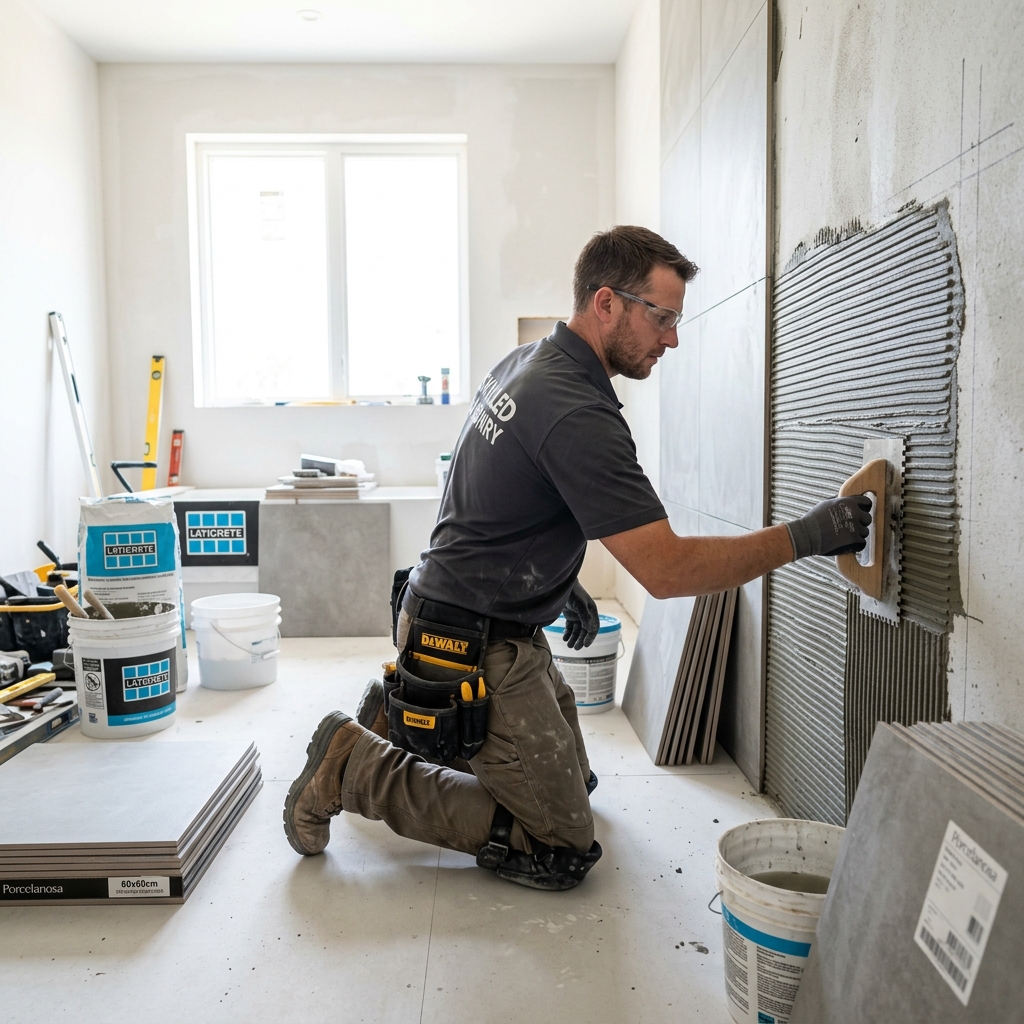
Tile Adhesive vs Traditional Cement: Which is Better for Your Home?
For decades, building a home meant relying on traditional methods and materials. When it came to flooring and wall cladding, the go-to solution was a simple mixture of sand, cement, and water. However, the construction industry has undergone a massive evolution. The tiles we use today are fundamentally different from those used thirty years ago, and as a result, the methods we use to install them must also evolve.
The debate of tile adhesive vs traditional cement is one of the most critical discussions any homeowner or builder must have before starting a project. If you want a floor that sounds solid, looks perfect, and lasts for generations without tiles cracking or popping off, understanding the science behind these two materials is paramount. Whether you are sourcing the best tile adhesive in Ballia or planning a high-end villa renovation, this comprehensive guide will definitively answer which bonding agent is better for your home.
The Evolution of Tiles: Why the Old Ways Fail
To understand why the debate between tile adhesive and traditional cement even exists, we must first look at how tiles themselves have changed.
The Era of Ceramic Tiles
In the past, the market was dominated by traditional ceramic tiles. These tiles were relatively small (e.g., 8x8 inches or 12x12 inches) and highly porous, meaning they absorbed a significant amount of water (often more than 10%).
When laid with a traditional sand and cement mortar, the porous back of the ceramic tile would absorb water from the wet cement mixture. As the cement cured and crystallized within the pores of the tile, it created a strong mechanical bond. For these older, porous tiles, cement worked reasonably well.
The Rise of Vitrified and Porcelain Tiles
Today, the aesthetic and functional demands of homeowners have led to the dominance of vitrified and porcelain tiles. These modern marvels are fired at incredibly high temperatures, resulting in a dense, glass-like body.
The key characteristic of modern vitrified tiles is their exceptionally low porosity—they absorb less than 0.5% water, and some premium slabs absorb almost zero. Furthermore, modern tiles are massive, often reaching sizes of 4x2 feet, 6x4 feet, or even larger.
The Problem with Cement: Because modern vitrified tiles are practically waterproof, they cannot absorb the water from traditional cement mortar. Therefore, the mechanical bond that cement relies upon simply cannot form. The cement mixture dries against the smooth back of the tile, acting more like a temporary wedge than a permanent bond. This leads to hollow-sounding floors, debonding, and eventually, cracked tiles.
What is Traditional Cement Mortar?
Traditional mortar for tile installation is typically a thick bed mixture made on-site by mixing Portland cement, river sand, and water.
The Pros of Traditional Cement
1. Low Initial Material Cost: Cement and sand are inexpensive and widely available anywhere.
2. Familiarity: Every local mason and contractor knows how to mix and work with basic cement mortar.
3. Thick Bed Leveling: Cement mortar is often applied in thick layers (20mm to 40mm or more). This thick bed allows masons to level out significant undulations in the concrete floor sub-base simultaneously while laying the tiles.
The Cons of Traditional Cement
1. No Chemical Bond: As discussed, it cannot adhere to modern, low-porosity vitrified or porcelain tiles.
2. Inconsistency: Mixed on-site, the ratio of sand to cement and water varies from batch to batch, leading to weak spots and inconsistent strength across the floor.
3. Rigidity and Shrinkage: Cement mortar is highly rigid once cured and prone to shrinkage. It cannot accommodate the natural thermal expansion and contraction of the building or the tiles, leading to stress cracks.
4. Mess and Inefficiency: Mixing sand and cement on-site requires a lot of space, creates dust and mess, and is labor-intensive.
5. Excessive Weight: The thick bed adds significant dead weight to the structural load of the building.
What is Tile Adhesive?
Tile adhesive is a modern, scientifically formulated, ready-to-use mixture. It contains Portland cement, carefully graded fine sand/aggregates, and crucially, specialized synthetic polymer additives. You only need to mix it with clean water in the specified ratio.
The Pros of Tile Adhesive
1. Exceptional Chemical Bond: The polymer additives create a chemical bond (utilizing Van der Waals forces) that adheres strongly to non-porous surfaces like vitrified tiles, glass mosaics, and even existing old tiles.
2. Flexibility and Deformability: High-quality polymer-modified adhesives are flexible. They act as a shock absorber between the tile and the substrate, accommodating structural movements and thermal expansion without transferring stress to the tile.
3. Consistent Quality: Manufactured in controlled factory environments, every bag ensures the exact right mix of ingredients.
4. Thin-Bed Application: Applied with a notched trowel in thin layers (typically 3mm to 6mm), it saves space, reduces the dead load on the building, and allows for faster installation.
5. Specialized Formulations: Available in various types (e.g., waterproof for bathrooms, highly flexible for exteriors, epoxy for industrial use) to meet the exact demands of any specific area.
The Cons of Tile Adhesive
1. Higher Initial Cost: Per bag, tile adhesive is more expensive than a bag of plain cement. However, this is offset by lower application thickness, faster labor, and zero replacement costs down the line.
2. Requires a Level Substrate: Because it is applied in a thin bed, the underlying concrete floor or plastered wall must be pre-leveled and cured before the adhesive is applied. You cannot use thin-bed adhesive to fix a severely sloping or uneven floor.
Insights from the Experts: The industry experts OTF Perspective
When discussing tile installation standards, the insights of building material expert industry experts (from the educational YouTube channel industry experts OTF) are invaluable. He frequently advocates for the scientific approach to building and strictly warns against using traditional cement for modern tiles.
According to industry experts, the failure of tile installations in modern Indian homes is almost entirely due to incorrect material selection and outdated installation practices. He emphasizes that standards like IS-15477 (Indian Standard for Tile Adhesives) exist for a reason.
He highlights that contractors often try to cut corners by mixing a handful of tile adhesive into a large batch of traditional cement mortar. This is a critical mistake. Diluting the polymer content ruins the chemical bonding properties of the adhesive, giving you the worst of both worlds.
If you are laying low-porosity vitrified tiles, large format slabs, or installing tiles in demanding areas like exterior facades or bathrooms, relying on traditional cement is a guaranteed recipe for failure. The best way to lay tiles is to respect the chemistry of the materials involved.
Tile Adhesive vs Cement: A Head-to-Head Comparison
Let's break down the comparison across several critical factors to help you make the right choice for your home.
1. Bonding Strength and Durability
- Traditional Cement: Relies on a mechanical bond. Excellent for highly porous stones or old-style terracotta/ceramic tiles, but fails completely on modern vitrified tiles. Over time, shrinkage causes debonding.
- Tile Adhesive: Utilizes polymer technology for a high-strength chemical bond. Will securely hold dense, non-porous tiles and slabs for decades.
- Winner: Tile Adhesive
2. Application on Modern Tiles (Vitrified/Porcelain)
- Traditional Cement: Highly unsuitable. The lack of water absorption by the tile prevents bonding.
- Tile Adhesive: Specifically engineered for this exact purpose. Polymer-modified adhesives (Type 2 or higher under IS-15477) are mandatory for vitrified tiles.
- Winner: Tile Adhesive
3. Flexibility and Crack Resistance
- Traditional Cement: Highly rigid. When the temperature changes and the tiles expand slightly, the rigid cement cannot flex. This stress transfers to the tile, causing it to pop loose or crack.
- Tile Adhesive: Polymers provide vital flexibility. Specialized adhesives (labeled S1 or S2 for deformability) can absorb these stresses, protecting your expensive tiles.
- Winner: Tile Adhesive
4. Workability and Open Time
- Traditional Cement: Dries relatively quickly, giving the mason very little time to adjust the tile once placed.
- Tile Adhesive: Features an "extended open time" (often denoted by the letter 'E' in ISO-13007 classifications). This allows the adhesive to remain workable on the floor longer, and gives the mason ample time to perfectly align and level the tiles.
- Winner: Tile Adhesive
5. Cost Effectiveness
- Traditional Cement: Cheaper upfront material cost. However, the thick bed application requires more material volume.
- Tile Adhesive: More expensive per kilogram. But, because it is applied very thinly (3-6mm), a single bag covers a much larger area. Furthermore, the lack of future repair costs makes it vastly more economical in the long run.
- Winner: Tile Adhesive (Long-term value)
The Best Way to Lay Tiles: Adopting Modern Practices
Choosing the right material is only half the battle; proper application is equally critical. If you are sourcing tile adhesive in Ballia or any other fast-developing region, ensure your contractor follows these modern best practices:
1. Substrate Preparation: The concrete slab or wall plaster must be fully cured, perfectly flat, clean, and dry. Do not use tile adhesive to fix deep holes or level a badly poured slab.
2. Proper Mixing: Always mix tile adhesive with water using a slow-speed mechanical stirrer. Never mix it by hand with a shovel, as this leads to lumps and unactivated polymers. Allow the mix to 'slake' (rest) for 5-10 minutes before applying.
3. The Trowel Method: Apply the adhesive using a suitably sized notched trowel. Comb the adhesive in straight, parallel lines. Never use the "spot bonding" method (placing blobs of adhesive at the corners of the tile), as this leaves hollow voids that cause tiles to break under impact.
4. Back-Buttering: For any tile larger than 2x2 feet, apply a thin, flat coat of adhesive to the back of the tile as well as the combed adhesive on the floor. This ensures 100% coverage and maximum bond strength.
Making the Right Choice for Your Home
The conclusion of the tile adhesive vs traditional cement debate is clear and scientifically proven. While traditional cement had its place in the past when dealing with porous ceramic tiles, it has no place in a modern home utilizing vitrified tiles, large porcelain slabs, or glass mosaics.
Attempting to save a small amount of money upfront by using plain cement for modern tiles will inevitably lead to debonding, hollow sounds, and cracked floors within a few years. The cost of ripping up a failed floor and redoing it is astronomical compared to the slight premium paid for quality tile adhesive.
If you want a flawless finish, insist on using a high-quality, polymer-modified tile adhesive that complies with IS-15477 standards.
Frequently Asked Questions (FAQs)
Q: Can I mix cement into tile adhesive to increase volume and save money?
A: Absolutely not. This is a common but disastrous practice. Mixing plain cement into a pre-formulated tile adhesive dilutes the polymer concentration, effectively destroying its chemical bonding properties and flexibility. You are essentially turning an expensive adhesive into weak cement.
Q: Is it okay to use traditional cement for ceramic tiles on walls?
A: While cement *can* bond to porous ceramic tiles, applying a thick, heavy bed of cement on a vertical surface is difficult, messy, and prone to sagging. A standard Type 1 tile adhesive is much easier to apply thinly, grips the wall better, and ensures the tiles won't slip down during installation.
Q: I have an uneven concrete floor. Should I use a thick bed of cement to lay the tiles and level it simultaneously?
A: No, this is an outdated practice. The modern, correct approach is to first level the floor using a cement-sand screed or a self-leveling compound. Allow this leveling layer to cure completely. Once the floor is flat, use a thin bed of tile adhesive to install the tiles.
Q: How do I find the best tile adhesive in Ballia for large slabs?
A: Visit reputable, authorized dealers of major construction chemical brands in Ballia. Look specifically for adhesives rated as IS-15477 Type 3 or Type 4, or ISO-13007 C2TES1. These classifications guarantee the high bond strength and flexibility required for large format slabs.
Q: Why does my newly laid tile floor sound hollow when I tap on it?
A: A hollow sound indicates a lack of adhesive coverage beneath the tile. This usually happens when contractors use the incorrect "blob" or "spot bonding" method instead of properly combing the adhesive with a notched trowel and back-buttering the tile. It can also occur if traditional cement was used and has shrunk away from the tile. Over time, these hollow spots will likely crack if a heavy object is dropped on them.
Conclusion
Building or renovating a home is a significant investment of time, money, and emotion. The foundation of a beautiful interior lies in the quality of the materials you cannot see, primarily the bonding agents. By choosing specialized, polymer-modified tile adhesive over traditional cement, you are choosing science, durability, and peace of mind. Embrace modern building practices, listen to experts, and ensure your beautiful floors stand the test of time.